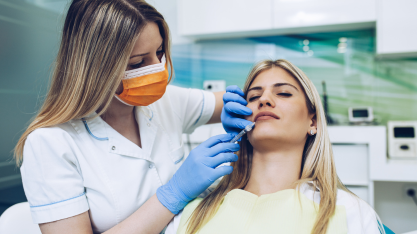
Expertise for testing for peptides in cosmetics and protein content in cosmetic raw materials and peptides in cosmetics. Our biochemistry expertise can help you develop or produce safe and innovative beauty products.
Peptides in cosmetics and proteins in hair or skin care products are increasingly used to enhance the performance of cosmetic products, particularly in anti-ageing skin care treatments. Cosmetics with peptides also boost opportunities for product formulation innovation to gain market differentiation. Peptides can be chemically synthesised to achieve high-purity ingredients for cosmetic products.
Additionally, sourced from plants, algae and even fungi, proteins can then be converted to a soluble form through hydrolysis for easier product formulation, and then used in all types of cosmetics (emulsions, lotions, gels, powders). They are widely accepted as natural ingredients and are generally quite stable. A wide range of vegetable proteins are used in cosmetics, such as those sourced from wheat gluten, rice, oats, sunflower, almonds, peanuts and soy.
Some peptides have been used in beauty products to achieve improvements in skin firmness, thus decreasing the appearance of wrinkles. Wheat gluten (often called wheat protein) is a unique cereal protein that offers high elasticity when hydrated. Studies have focused on its application as a moisturising agents in skincare. Soy proteins are have been used as ingredients due to their gelling and emulsifying effects. Lipid plant extracts may also contain residual levels of proteins depending on their manufacturing process. These proteins can be a source of type I allergy of food origin (in particular wheat proteins). Exposure to them can potentially lead to adverse reactions and are classified as such in the category of “new allergens.” Due to their allergenic potential, the quantity and type of proteins present in raw materials must be determined by accurate, and robust analytical testing.
Helping you to innovate with confidence: Our expertise in protein testing for cosmetics
Our chemical analysis, biochemistry and microbiology experts employ a wide range of testing approaches to support brands so they can innovate and manufacture with confidence.
Total protein assays: CBQCA or BCA assays for quantification of total peptide/protein in cosmetics raw materials (oils, waxes, powders, aqueous and cellular solutions).
Peptide assay: SDS-PAGE, ELISA, capillary electrophoresis using micellar electrokinetic chromatography (MEKC)
Peptide identity: Mass spectrometry, ELISA
Amino Acid analysis: Confirms the peptide's amino acid composition
Collagen assay: Hydroxyproline assay
Collagen identity (type I, II or III): SDS-PAGE
Collagen impurities: elastin enzymatic assa
Peptide purity: We use chromatography (HPLC, SEC) and SDS-PAGE to determine checks for impurities, and ensures batch consistency.
Residual DNA: Single-stranded and double-stranded DNA by flurometric methods.
Impurities - Carbohydrates: Dosage adapted from the DUBOIS method
Impurities - Lipids: Colorimetric methods (SPV)
Sulfated and non-sulfated Glycoaminoglycans: Analysis by capillary electrophoresis (CZE) and colorimetric assay (for chondroitin sulfate), For Non-sulfated: Analysis by CZE and ELISA
Microbiology: Total viable count (according to ISO 16212, ISO 21149 or ISO 11731), challenge testing (according to ISO 11930), endotoxin assay (according to Eur.Ph 2.6.14)
Packaging Testing: Cosmetics packaging testing for safety and compliance
As the trend for natural ingredients continues, and more novel peptides and proteins are explored for use in cosmetics formulations, a scientific approach to understanding these complex ingredients such as total protein content, allergen screening, heavy metals analysis and screening for other restricted substances to support your product development, raw materials selection, or production and packaging quality control. Additionally we also provide characterisation for other complex biomolecules including, hyaluronic acid, collagen and chitosan.
Supporting cosmetic safety, quality and compliance: Determination of TFA in peptide ingredients
The production of peptides ingredients by solid-phase peptide synthesis (SPPS) typically can involve a cleavage stage involving trifluoroacetic acid (TFA). As a residual impurity in peptide raw materials, and in finished cosmetic formulations, TFA is a area of concern. TFA is belongs to the PFAS group of substances, and is increasingly the focus of regulatory attention. We help cosmetic innovators assess their peptide ingredients for residual TFA helping them to mitigate risks associated with product safety and quality.
Why choose Intertek as your cosmetic peptides testing partner?
Our cosmetics testing experts offer a toolbox of Total Quality Assurance solutions for cosmetics testing, delivered from our centre of excellence for cosmetics testing, LaCoMed, located near Chalon-sur-Saône in France. Supporting your value chain from raw materials sourcing, across production processes and through to finished products, we offer responsive analytical resources to ensure consistent raw material quality and technical consulting to resolve production issues.
Additionally we can provide a range of audit solutions for your global supply network including GMP ISO 22716 audits solutions such as pre-audit inspections, training and formal audits with the use highly relevant ISO 22716 audit checklists to help you drive quality and transparency across your supply chains.
- End‑to‑end testing from raw material screening to finished product
- Over 20 years of proven lab testing expertise
- Advanced characterization and restricted substance screening capabilities
- Unique biochemical services for advanced and complex ingredients
- Experienced microbiology supporting quality and stability
- Comprehensive regulatory and toxicology support for global market launches
Related Links
NEW!
Blog: Biotech in cosmetics: Peptides in skincare
ARTICLES
Case Study: Controlling TFA in Cosmetic Peptides
Article: Quantitative Analysis of Biomolecules in Cosmetics
Case Study: Determination of Formaldehyde in Cosmetics
Understanding the EU Cosmetics Regulation and Attaining Compliance
BROCHURE
Determination of 57 Allergens in Cosmetics