
Digital Twins at Scale: How Massive Data Centers Are Redefining System Assurance
07 Apr 2026
The Need for Rigorous, Independent Assurance Grows Exponentially
Digital ecosystems are evolving at a pace that challenges traditional engineering models. Across industries, from automotive to aerospace to semiconductor manufacturing, organizations are grappling with unprecedented system complexity. There is a fundamental shift happening: massive computer availability and global data‑center expansion are enabling entirely new levels of abstraction in system design and simulation.
This transformation carries profound implications for safety, reliability, and third‑party assurance.
Data Centers Are Unlocking a New Engineering Paradigm
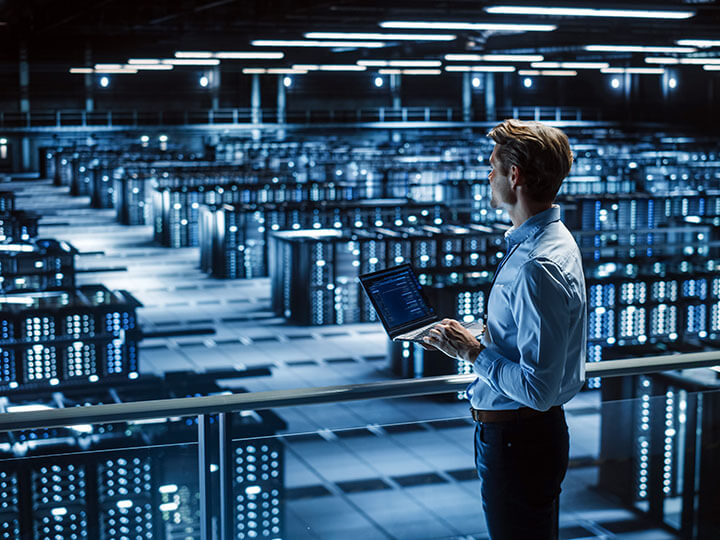
The global build-out of hyperscale data centers has effectively removed many of the computational constraints that once limited large-scale system modeling. These environments now support massive multi-physics simulations, real-time monitoring of entire cities, and the modeling of interactions between complex systems and frequent software updates.
Where engineers once abstracted individual components or subsystems, they can now simulate and validate system-of-systems interactions at a scale previously impossible.
This elevated abstraction is not just an evolution, it is becoming a strategic necessity.
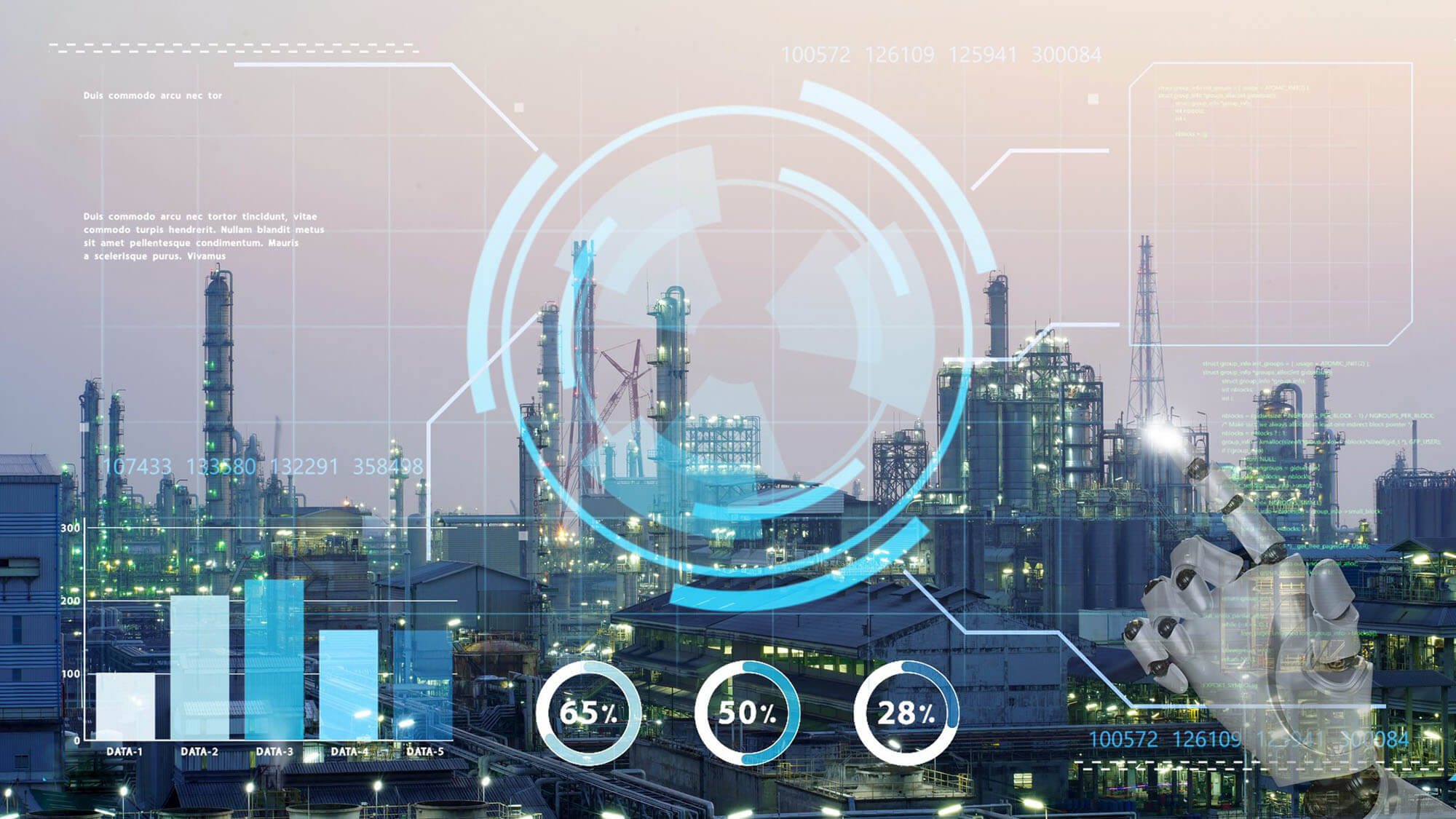
Digital Twins: Expanding Well Beyond the Factory Floor
Rapidly growing competition in digital and virtual twin technology across sectors ranging from automotive and aerospace to chip manufacturing.
Digital twins are no longer static replicas. They are dynamic, cloud-connected representations integrating:
- Mechanical and electrical systems
- Embedded software
- Environmental and operational data
- AI-driven predictive models
The challenge now is ensuring that these models behave accurately and safely as they scale across increasingly heterogeneous sources of data.
This shift reinforces the need for independent validation to ensure that digital twins remain trustworthy as they are applied to higher-order, cross-domain interactions.
Case Study: Scaling Digital Twins in Semiconductor Manufacturing
Background
Semiconductor fabrication is one of the most complex manufacturing processes in the world, involving hundreds of process steps, tightly controlled physical and chemical environments, and extreme sensitivity to variation. As devices become more advanced (especially in areas like 3D-ICs, chiplets, and heterogeneous multi‑die packaging) the interactions between materials, thermal effects, lithography limits, and electrical behavior grow exponentially more difficult to predict.
In recent years, largescale datacenter computing has made it possible for chip manufacturers to move beyond modeling individual process steps. They can now build fab-level or line-level digital twins, enabling simulation of entire process flows and cross-domain interactions. This trend is seen in the broader industry shift toward much larger models enabled by massive computer resources.
The Challenge
A semiconductor manufacturer finds that traditional simulation models are no longer adequate for predicting defect hotspots in next-generation multi-die assemblies.
The company would need to evaluate:
- Thermo‑mechanical stress interactions across stacked dies
- Multi‑physics behavior in advanced packaging materials
- Lithography variability impacting yield across complex patterning steps
- Software‑driven tooling updates that altered machine parameters in real time
These variables interacted in ways that were too complex for conventional EDA tools to capture in isolation. Increasing variability in advanced packages and stacked chips has been highlighted by industry experts as a major concern requiring deeper, system-level analysis.
The Digital Twin Solution
Leveraging cloud‑scale computing, the company can build a full‑stack semiconductor digital twin integrating:
- Equipment telemetry
- Process modeling
- Material simulations
- Layout-dependent patterning effects
- AI-based anomaly detection
This data center-powered, multi-physics simulation is capable of modeling interactions far beyond what local tools could traditionally handle.
AI agents analyzed massive datasets from metrology, inspection, and inline sensors to identify potential failure modes—echoing the article’s point that AI will play a significant role in finding trouble spots across large, complex datasets.
AI Agents: Navigating the Flood of Data
As data volume and system complexity grow, AI agents are becoming essential to detect anomalies, identify failure points, and evaluate how changes in one subsystem affect others. AI will play a significant role in sorting through large datasets to pinpoint potential trouble spots.
But the use of AI introduces new assurance challenges:
- How do we validate AI-assisted engineering tools and the data they are trained with?
- How do we ensure transparency and traceability in system-level decisions?
- How can safety, cybersecurity, and compliance be maintained as AI models evolve?
These questions illustrate why assurance must evolve alongside abstraction, and Intertek’s AI² service and can support the validation of these AI models.
Why This Matters for Safety and Compliance
As abstraction layers grow, so does the risk that failures occur. These failures were once confined to isolated components, but can now cascade across the larger digital ecosystems. A software update intended to improve performance in one module can now impact:
- Multi-vehicle interactions
- Smart-infrastructure systems
- Cloud-connected fleets
This interconnectedness makes third-party validation more critical than ever. Independent assessments help ensure that:
- Interfaces between systems are robust
- Safety functions remain intact across updates
- Cybersecurity risks are minimized
- Compliance is maintained throughout the system lifecycle
Emerging engineering models will increasingly rely on this external validation to maintain trust in digital-first environments. Intertek’s wide range of cybersecurity services provides multiple third-party solutions for the digital world.
How Intertek Supports the Growing Data Center Ecosystem
As organizations rely on hyperscale computing to power large-scale digital twins and system-of-systems simulations, ensuring the resilience, performance, and safety of these data centers becomes essential. Intertek provides comprehensive data-center assurance—including electrical and mechanical safety evaluations, uptime risk assessments, environmental and sustainability verification, and commissioning/retro-commissioning services—to help operators build and maintain trusted, high-availability digital infrastructure.
Conclusion: A New Frontier for Assurance
The move toward much larger and more sophisticated abstractions marks a pivotal moment for engineering and certification. As industries embrace digital twins, cloud‑scale simulation, and AI-enhanced design, the importance of rigorous, independent assurance grows exponentially.
Intertek’s role in this ecosystem—verifying safety, validating performance, and ensuring compliance—will continue to expand as system complexity increases. Abstraction brings opportunity, but it also demands vigilance. By pairing advanced engineering with trusted third-party assurance, organizations can innovate confidently in an interconnected, data-driven world.

You may be interested in...
Industrial
We provide quality assurance, testing, inspection, and certification, as well as education and advisory services for your industrial production, equipment, assets, and processes with our expertise and diverse services across global operations and supply chains.
Data Center Services
Intertek delivers end-to-end data center testing, inspection, commissioning, and certification across every phase of the full project life cycle, from Design and Building to Commissioning.