
Ensuring Critical Information Is Seen, Heard, and Understood When It Matters Most
In healthcare environments, alarms are critical safety mechanisms. When designed effectively, they help clinicians respond quickly to patient needs. When poorly designed, they can be misunderstood, ignored, or missed entirely.
IEC 60601-1-8 defines requirements for alarm systems in medical electrical equipment, ensuring that alarms are detectable, distinguishable, and meaningful in real-world clinical environments.
For manufacturers, compliance is not just about generating an alarm. It’s about ensuring that the alarm leads to the right action at the right time and minimizes potential harm to the patient.
What is IEC 60601-1-8?
IEC 60601-1-8 is a collateral standard within the IEC 60601 series that specifies requirements for alarm systems and alarm signals in medical electrical equipment and systems. These alarms may be:
- Audible (tones, patterns, sequences)
- Visual (lights, messages, indicators)
- Informational displays that communicate system or patient status
The standard establishes a consistent framework for how alarms are prioritized, presented, and interpreted, helping reduce confusion in environments where multiple devices may be in use simultaneously. IEC 60601-1-8 provides manufacturers guidelines so the developed alarms are not just triggered but understood and acted upon.
Why Alarm Design Is a Patient Safety Issue
Modern clinical environments are often filled with devices, each capable of generating alerts. This creates a well-documented challenge known as alarm fatigue, where excessive or unclear alarms can overwhelm users and reduce responsiveness.
IEC 60601-1-8 addresses this by requiring alarm systems to be designed with clarity, consistency, and clinical relevance. Some of the most important risk considerations include:
- Alarms that are too frequent or non-actionable
- Signals that are difficult to distinguish from one another
- Poor prioritization of critical vs non-critical conditions
- Inadequate visibility or audibility in real environments
- Misinterpretation due to unclear messaging or design
These issues are not just theoretical. They directly impact how quickly and effectively clinicians respond to patient needs.
What Types of Devices Are Affected?
IEC 60601-1-8 applies to a wide range of medical electrical equipment that includes alarm functionality. This includes devices used in hospitals, clinics, and home healthcare environments. Common examples include:
- Patient monitoring systems
- Ventilators and anesthesia systems
- Infusion pumps
- Dialysis equipment
- Imaging systems with alert conditions
- Home-use medical devices with safety alerts
If a device communicates safety-critical information through alarms, this standard is highly relevant.
What Does IEC 60601-1-8 Require?
IEC 60601-1-8 focuses on ensuring that alarm systems are perceivable, understandable, and actionable. It establishes expectations for how alarms are designed, categorized, and presented to users.
Key Areas of Focus
| Area | What It Means in Practice |
| Alarm Prioritization | Differentiating high, medium, and low priority conditions |
| Signal Characteristics | Standardized tones, patterns, and visual indicators |
| Detectability | Ensuring alarms can be seen and heard in intended environments |
| Distinguishability | Making alarms clearly different from one another |
| Alarm Information | Providing clear meaning and context for user action |
| Risk Management Integration | Aligning alarm behavior with ISO 14971 processes |
The goal is to ensure that alarms are not just technically compliant, but effective in guiding user response under real-world conditions.
How IEC 60601-1-8 Fits Within the Compliance Landscape
Alarm systems are closely tied to safety, usability, and risk management. Because of this, IEC 60601-1-8 is typically applied alongside several related standards.
- IEC 60601-1 establishes overall safety and essential performance
- IEC 62366-1 ensures user interfaces that generate alarm signals are understandable and usable
- ISO 14971 ensures that alarm-related risks are identified and controlled
- IEC 60601-1-2 ensures alarms function reliably in electromagnetic environments
Together, these standards help ensure that alarm systems function reliably and deliver clear, meaningful information in real-world use.
Alarm Systems and the Risk Management File (RMF)
Alarm systems are a critical component of the Risk Management File (RMF) because they often serve as a primary risk control measure. In many cases, alarms are used to alert users to hazardous conditions or system failures. As a result, manufacturers must demonstrate that these alarms are effective and appropriate for their intended use.
Within the RMF, this includes:
- Identifying hazards that require alarm-based mitigation
- Defining appropriate alarm priorities and responses
- Verifying that alarms are detectable and distinguishable
- Demonstrating that users can interpret and act on alarm signals
- Ensuring that residual risk remains acceptable
If an alarm is relied upon to reduce risk, its effectiveness must be clearly demonstrated.
Common Challenges in Alarm Design and Compliance
Alarm systems often appear straightforward in concept, but in practice they introduce a range of design and compliance challenges, particularly in busy or high-stress environments. Manufacturers frequently struggle to strike the right balance between providing sufficient alerts and avoiding overload. Excessive or non-actionable alarms can desensitize users over time, reducing responsiveness and increasing the risk of missed critical events.
Differentiating alarm signals is another common difficulty, especially when multiple devices are used in the same environment. If alarms sound similar or lack clear prioritization, users may hesitate or misinterpret the urgency of a situation. This challenge becomes even more complex when devices are intended for use across different settings, such as hospitals and home environments, where background noise, lighting conditions, and user experience levels can vary significantly.
There is also the need to align alarm design with usability expectations and risk management requirements. Alarms must not only function correctly, but also communicate meaning clearly and prompt appropriate action. Ensuring consistency across product lines or system components adds another layer of complexity, particularly for manufacturers managing multiple platforms or legacy designs.
These challenges highlight the importance of treating alarm systems as a core element of device safety, requiring thoughtful design, testing, and integration throughout the development process.
Why Intertek for IEC 60601-1-8 Testing and Compliance
In critical care environments, alarms are only effective if they lead to the right response. IEC 60601-1-8 provides the framework, but successful implementation requires thoughtful design, testing, and integration with risk management.
Intertek helps manufacturers develop alarm systems that meet compliance requirements and perform effectively in real-world use. Our approach focuses on understanding how alarms function within the broader system, connecting usability, risk management, and environmental considerations. We work with manufacturers to evaluate alarm detectability, clarity, and performance, ensuring alignment with both IEC 60601-1-8 and related standards.
With experience across a wide range of medical technologies, Intertek provides practical guidance that helps manufacturers reduce risk, improve usability, and bring products to market with confidence.
Intertek can help you develop alarm systems that are clear, reliable, and aligned with real-world use, supporting both compliance and patient safety.
IEC 60601-1-8 - Frequently Asked Questions (FAQs)
IEC 60601-1-8 applies to medical devices that include alarm systems or safety-related alerts.
Yes. IEC 60601-1-8 addresses both audible and visual alarm signals.
Alarm effectiveness depends on user understanding, making usability engineering a critical component.
Yes. Manufacturers must demonstrate that alarms are detectable, distinguishable, and effective.
Yes, some particular standards may alter how IEC 60601-1-8 gets implemented or tested for a specific category of medical devices. Intertek can help you manage and navigate these requirements.
Related Links
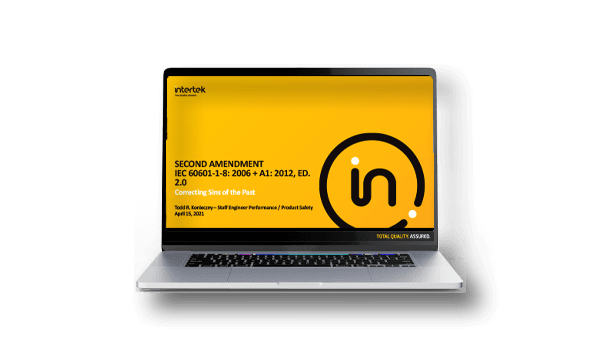
IEC 60601-1-8 AMD2 for Medical Alarms | Webinar
Our complimentary on-demand webinar on the 2nd Amendment of IEC 60601-1-8 for Medical Alarms walks you through all the important changes, provide some history and context behind these changes, discuss updates to normative references, terms & definitions, and go through a number of different types of alarm systems that are impacted.

Overview of IEC 60601-1 Standards and References
End-to-end solutions from product development and risk management file reviews to comprehensive testing to the IEC 60601-1 series.
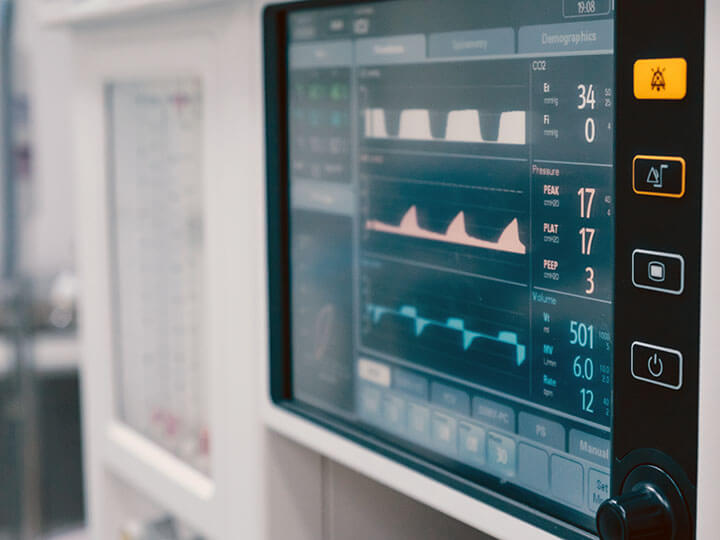
Knowledge Center
Download the latest information from our medical device compliance experts.
Six Medical Device Trends Shaping 2026
Six Strategies for Medical Device Compliance in 2026
Medical EMC In-Situ Testing: On-demand Webinar | White Paper
IEC 81001-5-1 and Cybersecurity for Medical Devices Webinar
Six Compliance-Related Questions About Connected Home Healthcare Devices
Accelerated Stress Testing for Medical Devices
Machine Learning and Artificial Intelligence (AI) in Medical Devices: Webinar | Fact Sheet
IEC 60601-1-2 Ed. 4.1 Overview of Requirements
Medical OEM Wireless Coexistence Testing
Biocompatibility Risk Assessment and Evaluation Plans
For more expert papers, recordings, and presentations, visit our Medical Resources hub.
Follow Us For More!
We’re always adding new content and looking for ways to help you simplify the regulatory and compliance process for medical devices.
** The Intertek legal entities that provide medical device management system certification services (including ISO 13485 and MDSAP) and Notified Body services (MDR 2017/745 and MDD 93/42/EEC) do not provide any consulting services. Clients who have used other Intertek legal entities’ consulting services are not eligible to receive management system certification services or Notified Body services from Intertek.